
OMA Member Story: Nidhi Sharma, MD, MPH, DABOM
Share this post
Restoring the Magic of Life
When Nidhi Sharma, MD, MPH, DABOM, was little, she had many questions about health that the adults around her couldn’t answer.
Her family had a long history of strokes. As she watched many of them suffer from the condition, she wanted to know the cause.
"I always asked my father, 'How did this happen? Why did this happen?'" she recalled. "He didn't know the answer, but he said, 'Maybe the doctor knows.'"
His response stuck with her from that day forward and brought her to where she is today.
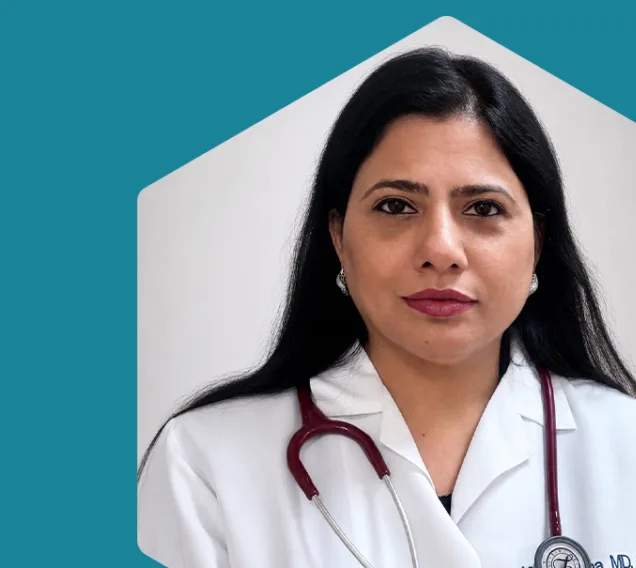
Dr. Sharma is now a board-certified primary care physician and Diplomate of the American Board of Obesity Medicine. She serves as the Medical Director of Beth Israel Lahey Health, helping patients manage chronic diseases and improve their metabolic health by addressing one of the most common causes of chronic conditions: obesity.
For Dr. Sharma, healthcare has always been the perfect blend of science, critical thinking, and helping people live healthier lives.
Finding the Root Cause
Throughout her career in primary care, Dr. Sharma saw firsthand how obesity contributed to other chronic conditions.
"Obesity medicine is something that we see everywhere," she said. "It's not an invisible disease."
She compares it to a well-known public safety message: If you see something, say something.
As a physician, she believes that means having honest, open conversations with patients about obesity and how obesity treatment can help their overall health.
“This is the epicenter of a lot of other medical problems. It’s a vicious cycle where all of them come together and make it more complicated."
Ten years ago, these conversations were even harder due to limited treatment options. She remembers patients asking what they could do to treat obesity, and while she knew there were options, there weren't many available at the time.
That motivated Dr. Sharma to pursue obesity medicine. She wanted to provide her patients with access to obesity treatment in the right way, with the right knowledge and tools.
When she attended medical school, obesity medicine was not included in textbooks or talked about in her classes.
“It was not a new concept but a new discovery. It was very interesting but very motivating. I said, ‘Okay, what’s next?’”
As the field of obesity medicine evolved, Dr. Sharma wanted to evolve with it.
More Than a Vacation
One of the most rewarding parts of Dr. Sharma's career has been witnessing the transformation of patients. She believes advances in obesity treatment have made this possible.
She describes GLP-1 medications as revolutionary, opening doors for patients who had struggled for years despite doing everything they could.
She recalls one patient story that showed her how transformative these medications can be.
After beginning treatment, the patient visited Disneyland for the third time in their life, but this time, they were able to enjoy the trip. They were able to walk through the park, enjoy attractions with family, and make it through the day without constantly stopping to rest. "This treatment is magical," the patient told her.
For the first time, their vacation felt like a vacation.
"We always tell people to take breaks and go on vacation," Dr. Sharma said. "Feeling overwhelmed on a vacation is just not acceptable."
Moments like this remind her that obesity medicine isn't just about helping patients lose weight. It's about helping them get their lives back.
Fighting Stigma with Education
While treatment options have expanded dramatically, Dr. Sharma believes stigma remains one of the greatest obstacles facing people living with obesity.
“Obesity stigma has been here for a long time. Medications have certainly helped, but despite having the support of medications, patients do feel stigmatized,” she said.
Ironically, she says the stigma still exists for many patients, even after treatment.
Many patients tell her that after losing weight, people immediately ask if they did it with the help of medication.
"That stigma still remains with them whether they took the medication or not.”
Those assumptions overlook the effort patients put into their obesity treatment journey.
She reminds every patient that medications do not work on their own. Success comes from a partnership between patients, physicians, dietitians, health coaches, behavioral changes, and consistent follow-up.
"A lot of education is needed for patients to feel empowered that they have achieved something,” she said. “It is not just the medication; it is their hard work; it is a collective effort."
Helping patients recognize their effort and celebrating their success is an important part of Dr. Sharma’s practice.
Building Sustainable Success
Dr. Sharma believes one of the most important conversations happens before treatment even begins.
She makes sure to explain to patients that obesity is a chronic, multifactorial disease that develops over time.
"The fact that it does not develop overnight means that it is not going to go away overnight."
She encourages patients to approach treatment with patience and realistic expectations. She communicates that obesity care is a long-term commitment, and that regular follow-up appointments are just as important as the medications or lifestyle changes.
Those ongoing visits provide accountability, encouragement, and the opportunity to adjust treatment as patients' lives and health evolve.
For Dr. Sharma, maintaining that physician-patient relationship is one of the keys to long-term success.
Treating Health as a Whole
Although obesity medicine is a focus of her practice, Dr. Sharma believes it should be considered alongside a patient's other chronic health conditions.
As a primary care physician, she incorporates obesity medicine along with diabetes management, hypertension care, and preventive medicine as each condition influences the other.
"You can't talk about one without talking about the other," she said.
For Dr. Sharma, every visit requires balancing immediate health concerns with long-term goals. If a patient’s blood pressure is dangerously elevated, that concern comes first.
At the same time, if obesity is contributing to multiple chronic conditions, it becomes part of the conversation.
Her practice also offers group medical visits, where patients can learn from one another, share experiences, and help shape future discussions based on their own questions and concerns.
For many patients, knowing they are not alone is very powerful in their treatment journey.
Looking Ahead
As obesity medicine continues to evolve, Dr. Sharma remains committed to helping patients navigate their health.
She hopes more people will eventually understand that obesity is a chronic disease that requires time, patience, and individualized treatment, not instant gratification or judgment.
As OMA celebrates Member Appreciation Month, Dr. Sharma's story highlights that obesity care is about more than just losing weight. Through education, individualized care, and walking alongside them through their journey, she helps patients build lasting habits that improve their health, restore their confidence, and allow them to find the “magic” in life.

Sponsored Ad

Sponsored Ad