
OMA Member Story: Mollie Cecil, MD, DABOM, FAAFP
Share this post
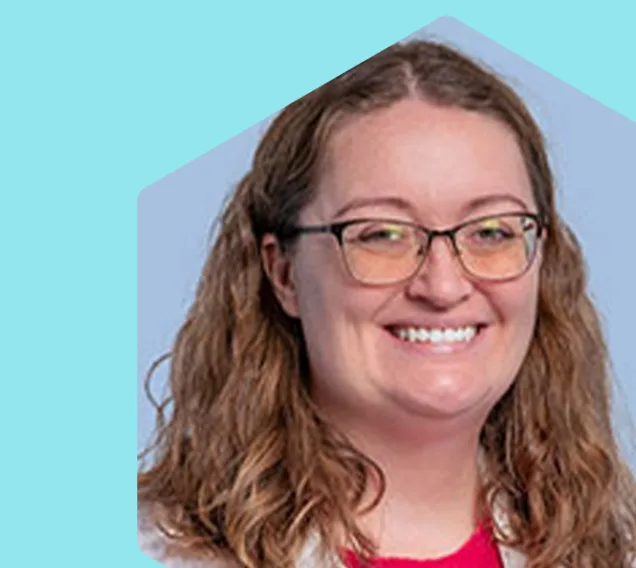
Building A Healthier Community One Patient at a Time
Growing up in rural West Virginia, Mollie Cecil, MD, DABOM, FAAFP, experienced firsthand both the challenges and the strengths of small communities.
From a young age, she admired the family physicians who served as trusted leaders in the town where she grew up.
“Doctors, especially family doctors, were these amazing pillars of the community that could make a big difference,” she said.
This admiration inspired her to pursue family medicine. Years later, after seeing the devastating impact obesity was having on both her patients and her own health, she found a new calling in obesity medicine, one that would address the root cause of many of the chronic diseases affecting the people she has always wanted to serve.
Finding the root cause
After starting her career in family medicine, Dr. Cecil quickly noticed a common thread.
West Virginia ranks among the states with the highest rates of obesity in the country, along with many of the diseases associated with it. Dr. Cecil realized that if she wanted to make a lasting difference in her patients' health, she needed to address obesity itself.
"It seemed like I was always chasing after the complications, without actually getting down to the real true underlying cause,” she said. “I realized if I could get to the obesity and treat that, everything else would follow."
That realization led her to pursue further education in obesity medicine.
Personal Turning Point
While caring for patients motivated Dr. Cecil, her own health journey helped her understand obesity on a personal level.
Like many individuals with obesity, she knew what healthy habits looked like and had access to a variety of resources at her disposal. Yet she could not reach her desired weight.
She realized that this was a universal experience, and it changed the way she viewed obesity. Rather than seeing it as a matter of knowledge or willpower, she came to understand it as a chronic disease that required a dedicated and individualized approach.
This experience was a big turning point for Dr. Cecil in understanding obesity as a disease process.
Creating a safe space
One of the most meaningful parts of Dr. Cecil’s work is being able to connect with patients and help them shed the shame and guilt they have carried for years.
Many of her patients come to her after experiencing judgement, bias, and dismissal in other healthcare settings. Others carry internalized bias and believe that they simply haven’t tried hard enough.
"Being able to tell a patient, 'I see you. I understand you. I know you're trying your best. I believe you. But your body can't do this on its own, and you're not a failure for that.'"
Those conversations are so important for Dr. Cecil to have with her patients.
Making patients feel understood and heard for the first time, and being there when they reach their goals, are some of the greatest rewards for Dr. Cecil.
“Helping them realize this is something that they can do…they just need the right support, tools and resources.”
Treating the whole community
For Dr. Cecil, practicing obesity medicine in West Virginia means addressing more than just the science and biology.
Many of her patients live in food deserts where healthy foods are harder to access. Tight household budgets, transportation barriers, and limited community resources make reaching dietary goals far more complicated.
Those realities inspired her to explore how obesity medicine can be adapted for underserved communities.
At OMA’s Annual Conference in National Harbor in 2025, Dr. Cecil gave a presentation on how providers can adapt the four pillars of obesity treatment in resource-disadvantaged communities. She shared practical strategies for helping patients succeed despite limited access to healthy food, exercise facilities, and medications.
For her, obesity care needs to meet patients where they are.
Fighting for Better Access
Despite advancements in obesity treatment over the past few years, Dr. Cecil believes that access remains one of the biggest barriers to better outcomes for patients.
She shares that the lack of insurance coverage for gold standard obesity treatment remains one of the most frustrating parts of practicing obesity treatment.
“When you talk about moral injury as a concept that leads to physician burnout, this is really one of the biggest examples of it,” she admitted.
Even though these medications exist that can dramatically change lives, many remain financially out of reach for her patients.
“If we really want to treat this and get ahead of this epidemic we’re facing in the country, we need the full set of tools at our disposal. We need the payers and the policymakers to help support us with that."
Advocacy beyond the exam room
Dr. Cecil has leaned into the idea of creating change beyond the exam room through her work with the OMA.
For the past several years, she has served on OMA's Advocacy Committee, helping advance policies that improve access to obesity care.
"If I see a problem, I want to try and fix it," she said. "With the advocacy committee, I really do feel like it actually gives me the tools to fix it."
Whether advocating at the national level or speaking about caring for underserved communities, she values the opportunity to amplify the voices of both patients and clinicians.
Looking ahead
Within the coming months, Dr. Cecil will open her own primary care and medical weight management practice that focuses exclusively on women’s health.
Her vision is to create a space where women feel safe discussing every aspect of their health and receive comprehensive, compassionate care tailored to their individual needs.
She also remains deeply committed to the state she has always called home.
West Virginia's statewide workforce initiative has a slogan that resonates with her: "Here for the long haul, y'all."
“That’s very much how I feel. I’m here until the end, and I very much want to help West Virginians experience prosperity in all areas of its life,” she said.
She hopes to remain a strong example for her two daughters to see as they grow up.
"I want them to see that it's not always easy," she explained. "What's important is that you're doing the right thing, and you’re trying to make the world around you a better place. Also, women can do cool things!"
As OMA celebrates Member Appreciation Month, Dr. Cecil's story reflects the power of combining personal experience and community commitment. By treating obesity at its root and advocating for better access across West Virginia, she is helping build a healthier future, one small town at a time.