
OMA Member Story: Miriam Zylberglait, MD, DABOM
Share this post
From Military Medicine to Obesity Medicine
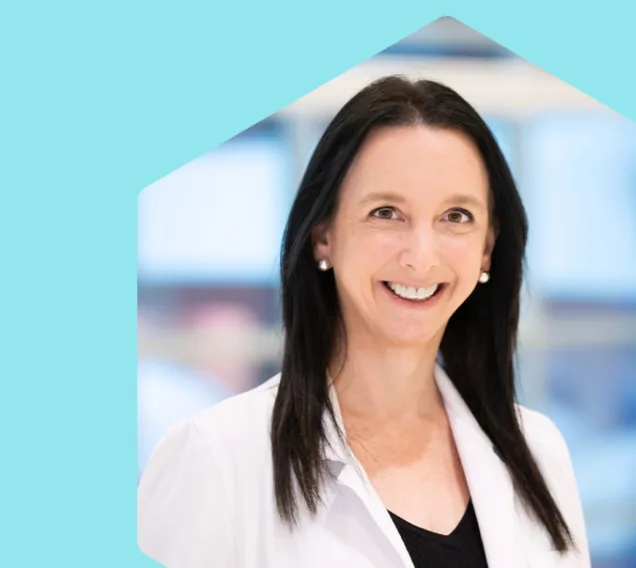
Long before she became a leader in obesity medicine in the United States, Miriam Zylberglait Lisigurski, MD, DABOM (better known to colleagues and patients as Dr. Z), was caring for patients as a physician in the Peruvian Navy.
Dr. Zylberglait spent 10 years practicing medicine in Peru before meeting her husband and moving to the United States, where she had to restart her career. She completed her residency at the University of Miami, followed by a fellowship in geriatrics through the Department of Veterans Affairs.
From Peru to Florida and across multiple specialties, one thing never changed: her commitment to helping patients live healthier lives.
Choosing Obesity Medicine
Throughout her career, Dr. Zylberglait has consistently cared for patients living with obesity. As research advanced and the understanding of obesity evolved, she recognized early on that she wanted specialized training to better care for her patients. She pursued board certification in obesity medicine to deepen her knowledge of the disease.
Today, she serves as the medical director of a hospital-based medical weight management program, where she works closely with bariatric surgeons.
Beyond caring for patients, Dr. Zylberglait is also passionate about educating future physicians. She enjoys mentoring residents and medical students, bringing a better understanding of obesity as a chronic, complex medical condition to a new generation.
More Than a Number
For Dr. Zylberglait, one of the biggest misconceptions surrounding obesity is that it can be defined by a number.
"It's a medical condition," she said. "Some people call it a disease. I like to call it syndrome because it's more complex than a single disease."
She believes obesity is influenced by many biological, environmental, social, and emotional factors that differ from patient to patient.
"This is nobody's fault," she said.
"There are many components that may take a person into that situation. It's not easy for them to live with a medical condition, plus the extra emotional and social “backpack” that they have to deal with."
That understanding shapes every patient interaction she has. Rather than focusing exclusively on weight loss, she helps patients improve their overall health and quality of life.
Meeting Patients Where They Are
Although Dr. Z has spent decades treating obesity, she says the emotional impact of caring for patients will never change. She admits it’s hard to see her patients struggle with the disease and the side effects that accompany it.
"I have been in medicine for decades, and I still continue to suffer for my patients.”
However, the empathy she holds for her patients makes the successes even more meaningful.
The most rewarding moments aren't necessarily dramatic transformations; they can be as simple as the smile on a patient’s face, their renewed confidence, or their families celebrating their accomplishments with them.
"When you see them moving more, feeling more comfortable in their own skin, it's a big reward,” she said.
These moments remind her that obesity treatment is about much more than a number on the scale: it's about helping people get their lives back.
Building Trust Through Experience
At first glance, some patients assume Dr. Zylberglait can't relate to their experiences because she is naturally thin. She shares that many patients are initially hesitant to listen to her because of this.
Rather than ignoring those assumptions, she shares her own story with them.
During both of her pregnancies, she developed gestational diabetes while continuing to work in a busy hospital. It gave her first-hand experience of the physical and emotional challenges that come with having a metabolic condition.
"I completely understand how painful those conditions can be," she explained.
She wants patients to know that, while every journey is different, she understands that health is about much more than appearance.
"It's not just about weight," she said. "It's about how your body works."
Speaking the Same Language
As an internist pursuing obesity medicine, Dr. Zylberglait felt very lonely. When she told colleagues she wanted to become board-certified in obesity medicine, many of them questioned the value of the specialty or said it wasn't something worth pursuing.
It was then that she discovered the Obesity Medicine Association.
"It was the only place I felt like I belonged, that I don’t have to fit in and fight for space."
For the first time, she found a community of healthcare professionals who understood obesity medicine as a complex condition. She was able to learn new things and find people she could share her experiences with.
"It was a community where people were speaking the same language."
That sense of collaboration continues to inspire her today.
Looking Ahead
In addition to patient care, Dr. Zylberglait remains passionate about research and education.
With a background in public health, she enjoys participating in research that advances obesity medicine while educating the younger generations. She hopes to continue expanding educational opportunities through her practice and looks forward to becoming even more involved with the OMA and attending future conferences.
For Dr. Zylberglait, the future of obesity medicine depends not only on scientific advances, but also on building a community of clinicians who learn from and support one another.
As the OMA [KP1] celebrates Member Appreciation Month, her story is a reminder that pursuing obesity medicine is never a straight path. By combining compassion with education and going against the norm within the healthcare space, she is helping patients improve their health and discovering that they are far more than a number on a scale.
[KP1]Do we typically say “OMA” or “the OMA”?