
OMA Member Story: Jacqueline Chan, MD, DABOM, FAAP, FOMA
Share this post
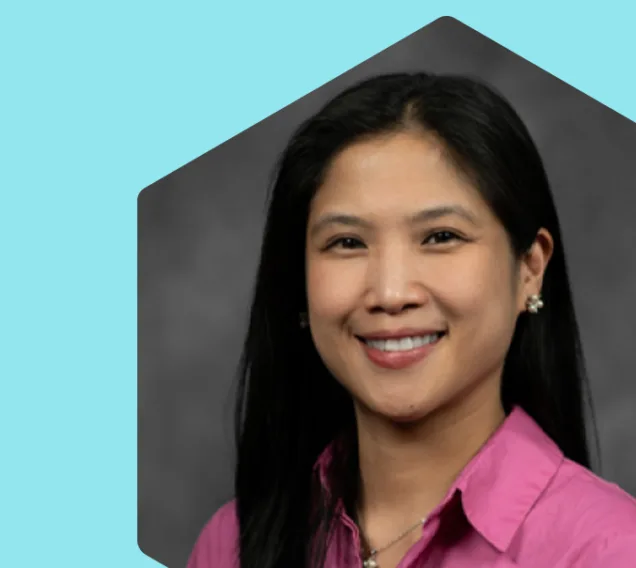
Building a Better Future for Children with Obesity
When Jacqueline Chan, MD, DABOM, FAAP, FOMA, introduces herself, she often jokes that people remember her best as "Jacqui Chan."
"It's easier to remember that way," she laughed.
But for the families she cares for, she's remembered for something far more meaningful.
As a pediatrician, pediatric endocrinologist, and obesity medicine specialist, Dr. Chan helps her young patients build healthier futures while changing the way pediatric obesity is understood and treated within her community.
After completing her training in Chicago, Illinois, and practicing in Georgia for five years, she relocated to Utah, where she now cares for children with endocrine disorders and obesity while leading the development of a multidisciplinary pediatric obesity program.
A Passion for Helping Children
Growing up, healthcare was already a familiar setting for Dr. Chan. Type 2 diabetes was common among her family members, and her mother lived with Graves’ disease. Experiencing healthcare challenges early on sparked an interest in medicine for Dr. Chan.
"Even from the beginning, I wanted to pursue endocrinology," she said.
During her time in medical school, she realized she had a passion for taking care of younger patients.
"I felt like I could have more of an impact," she said. "Helping them be healthy children and then become successful adults."
That philosophy continues to guide every patient’s encounter.
Treating Obesity Like the Disease It Is
One of Dr. Chan's biggest goals is helping both patients and other healthcare professionals better understand obesity.
"You can't treat obesity if you don’t understand obesity as it is," she said.
She believes many misconceptions begin with the assumption that obesity is simply the result of poor choices.
"It's not a poor choice. It's not a poor life choice. It's more than that."
Instead, she explains obesity as the complex, multifactorial disease that is shaped by genetics, biology, environment, behavior, and many other factors that are often beyond an individual's control.
She believes that understanding is one of the most powerful tools for reducing stigma.
"If you understand obesity as a disease," she said, "the stigma will instantly go away."
Growing a Program from the Ground Up
When Dr. Chan moved to Utah, she faced a challenge unlike any she had come across before.
She was tasked with building a multidisciplinary pediatric obesity program from the bottom up.
"I thought, 'How am I going to do this?' I’m used to practicing with a group, but starting [the group] is another story"
That journey led her to the Obesity Medicine Association.
Through the OMA's conferences, its Pediatrics Committee, mentorship program, and network of experienced clinicians, she found mentors who had already overcome many of the challenges she was facing.
"A lot of people in OMA have gone through the same thing I was about to go through," she said. "That made my journey easier than it could have been."
She also learned an important lesson about creating change within a healthcare system: data matters.
She carefully tracked referrals, medication use, behavioral health needs, and other patient trends to demonstrate the growing need for additional services. Those numbers helped her make the case for expanding her team and securing support.
Her advice to others hoping to build obesity programs is simple: "Know your clinic. Know your area. Collect the data. Then present it."
A Team Makes the Difference
Today, Dr. Chan's clinic reflects the collaborative approach she envisioned.
Her team includes pediatric providers, a registered dietitian, a behavioral therapist, specialists focused on physical activity, and connections with bariatric surgeons when appropriate.
"You need a team," she said.
At the same time, she encourages other clinicians not to wait until they have every resource in place before beginning obesity care. She believes providers can start by treating patients themselves and building relationships with other providers in the community for referrals.
As programs grow, multidisciplinary care can grow with them. The most important step is simply getting started.
Leading with Compassion
No matter how her clinic evolves, one principle remains unchanged for Dr. Chan: "My patient is my priority."
Every treatment plan begins with a simple question: “How can I help you?"
She believes every child deserves care that is free from judgment and tailored to their individual needs. That philosophy is also deeply personal to Dr. Chan. As a teenager, she was diagnosed with type 2 diabetes.
She understands firsthand what it feels like to navigate chronic disease at a young age. That experience reminds her that the greatest impact isn't always made through medication or lifestyle changes.
Sometimes, it's simply helping a child feel heard.
"It's not always the medicine," she said. "It's talking to a provider, feeling acknowledged, and feeling that they are heard."
Inspiring the Next Generation
One of Dr. Chan's greatest sources of motivation comes from seeing the ripple effect of obesity medicine.
She has watched patients regain confidence and improve their quality of life. She has also seen fellow clinicians begin offering obesity care after seeing her practice.
"When I started here, I was the only one treating pediatric obesity," she said. "Now I've moved the community to do the same."
She has even inspired pediatric fellows to pursue board certification in obesity medicine. Seeing others discover the field reminds her how much progress is possible.
Her advice for anyone entering obesity medicine is one she has learned through experience.
"Be strong," she said. "There are going to be a lot of challenges."
But she encourages clinicians to lean on their support systems, advocate for their patients, and remember the difference they're making every day.
Looking Ahead
As the field of pediatric obesity continues to grow, Dr. Chan hopes more healthcare professionals will recognize that effective obesity care can begin in any practice.
Whether through a multidisciplinary clinic or a single provider willing to start the conversation, every effort has the potential to change a child's future.
As the OMA celebrates Member Appreciation Month, Dr. Chan's story demonstrates that meaningful change often starts with one clinician willing to take the first step. By treating obesity as the complex disease it is, building collaborative care teams, and empowering other providers to do the same, she is helping transform not only the lives of her patients, but the future of pediatric obesity care.

Sponsored Ad

Sponsored Ad