
OMA Member Story: Al Robaina, MD, DABOM
Share this post
A New Way to Think About Obesity
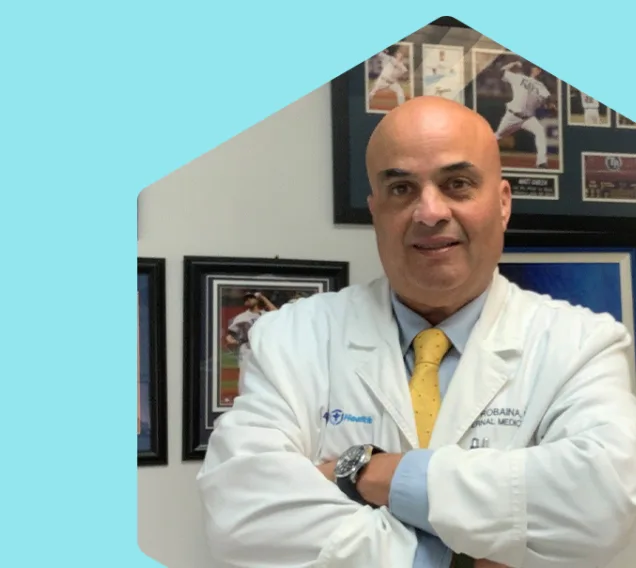
For the past decade, Al Robaina, MD, DABOM, has been helping patients as a board-certified internal medicine physician, helping patients with a variety of conditions such as hypertension, diabetes, and lipid disorders. But as he looked deeper at the root causes of many of those diseases, he realized there was one disease that seemed to be linked to them all: obesity.
Wondering what else he could do to help patients fight the disease of obesity, Dr. Robaina became board-certified in obesity medicine through the American Board of Obesity Medicine and discovered the OMA. This decision not only transformed the way he practices medicine, but also the way he understands his own health.
A Personal Journey
For Dr. Robaina, the decision to pursue obesity medicine wasn’t just driven by a desire to help others; it was also influenced by his own experiences.
Dr. Robaina shares that he struggled with overweight and obesity as a child. Although his weight improved as a teenager, the challenges returned in adulthood. That experience has shaped the empathy he brings to every patient encounter.
It also changed the way he viewed obesity.
Before receiving formal education in obesity medicine, Dr. Robaina thought treatment revolved around diet and exercise.
“Before I came to the OMA, I was never thinking about the four pillars. I thought, ‘It’s just diet and exercise, and that’s it.’"
Learning about obesity as a complex disease fundamentally changed his mindset.
A Better Way to Treat Obesity
Today, Dr. Robaina approaches obesity treatment using the four pillars of obesity treatment: nutrition therapy, physical activity, behavioral modification, and medical interventions. He shares that his patients love the idea of the four pillars being incorporated into his practice.
The framework allows him to explain that obesity is rarely the result of a single cause. Instead, it's a complex (and sometimes even genetic) disease that requires an individualized treatment plan.
For Dr. Robaina, helping patients replace guilt with understanding is one of the most important parts of care.
"I tell some of my patients, ‘You had obesity before you were born. It’s not your fault, and you can’t keep blaming yourself,” he said. “It's something that we can address. We can't just wait and see what happens. We have to engage and do something about it."
Helping Patients Think Differently
For Dr. Robaina, this isn’t just about weight loss; it’s about changing the lives of his patients.
“The most rewarding part for me is when you can help people not only overcome their weight problems but the consequences of them,” he said. “I’ve seen people reverse prediabetes and they stay there. I see people who have been fighting obesity for years and years. And now, not only have they been able to lose weight, but they also think differently."
“Your Health, Your Commitment.”
While obesity medicine has advanced dramatically in recent years, Dr. Robaina believes treatment success still depends on collaboration and commitment.
One of the biggest barriers he encounters in treating patients is helping them build sustainable habits and recognize the important role they play in their own health.
He shares his practice motto that reflects that idea: Your Health, Your Commitment.
"You are steering the boat," he tells patients. "You can do it. You just have to believe you can."
He believes that physicians provide education, tools, and support, but that real change happens when patients invest in themselves.
Fighting for Access
One challenge Dr. Robaina faces in his practice, however, is access to treatment.
Although there are a growing number of new treatment options like obesity medications, many patients are unable to obtain them due to price and denials from insurance.
“That’s one of the things I wish I could help my patients the most with: the new weapons and new medications that we have,” he said. “They are effective, and they can change people’s lives.” He describes them as “a bridge to help them fulfill a new life.”
Yet many patients can’t afford to spend hundreds of dollars each month on medications. He spends a significant amount of time navigating prior authorizations, only to see many requests denied.
“I think, as a society, we will find a way. It happened with diabetes, and I hope it will be the same case.”
Reaching Underserved Communities
Recently, Dr. Robaina has expanded his work beyond the exam room.
After years of describing himself as shy and reserved, he found a new sense of purpose through advocacy for his patients and the people in his community.
"I used to be a shy person," he admitted. "But now I want to talk. I want to talk to people."
He recently founded the Healthy Living Education Alliance, a non-profit in Florida that provides obesity education and resources in local communities, particularly among Spanish-speaking populations.
“I found out that the Spanish population is very underserved, and they are the most affected by this condition,” he said.
The alliance brings together pharmacists, neurologists, endocrinologists and other professionals to provide the best care and support to the community.
He also recently finished a book in Spanish to make the education more accessible.
"I want to reach the population that I know is not being given all of the education they need.”
Plans for the organization include teaching kitchens (a hands-on learning experience where participants prepare meals while receiving nutrition education, building practical cooking skills and understanding the science behind healthy eating) and additional programs.
Looking Ahead
As obesity medicine continues to evolve, Dr. Robaina remains hopeful for the future.
While collaboration, education and advances in treatment will remain crucial to obesity medicine, Dr. Robaina also believes in the power of changing the way we think about obesity.
Dr. Robaina hopes more patients come to understand that obesity is a chronic disease and not a personal failure.
As OMA celebrates Member Appreciation Month, Dr. Robaina's story is a reminder that some of the strongest advocates for patients are those who have shared the same experiences. Through his obesity care, work within his community, and commitment to education, he is helping patients replace blame with understanding and empowering them to take the next step toward better health.